Global Accessibility Standards: A Comparative Overview
As more countries improve accessibility standards, groups no longer depend on guesswork. They need clarity about what each standard expects and how this differs across the world.
Global accessibility standards are the laws that govern whether your website or product is accessible to all people, including people with disabilities.
Yet as there are so many standards across regions, understanding how they compare is crucial for any organization involved in working with international users.
A comparison will help you know where you are in this guide!
Global Accessibility Standards
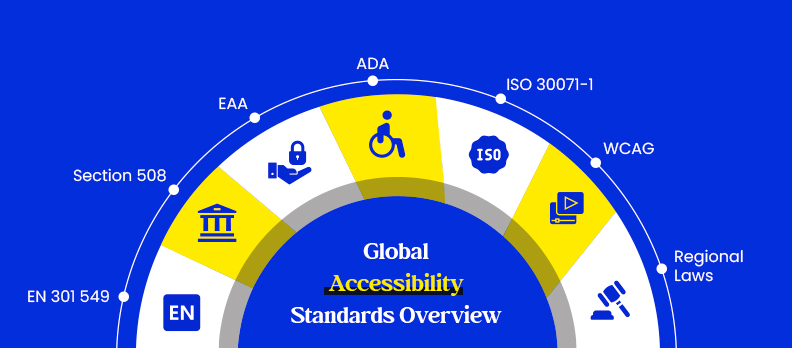
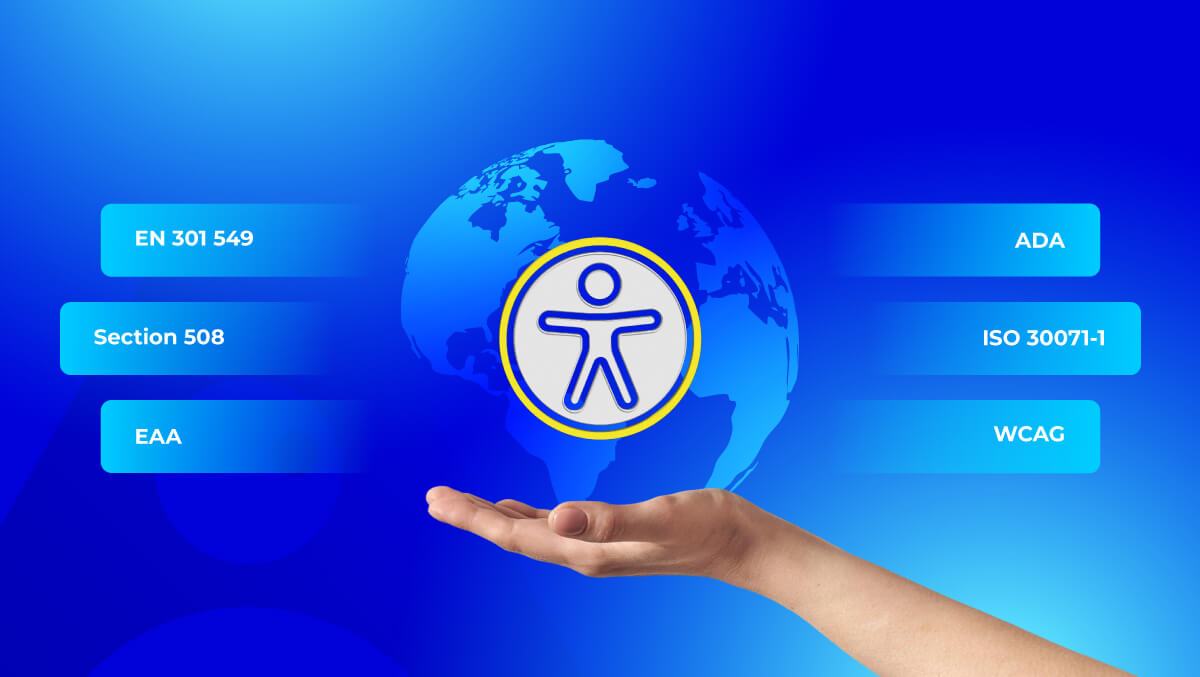
Below are the most popular accessibility standards globally. Most of them reference WCAG, but each one has its own purpose, legal framework and audience.
1. WCAG (Web Content Accessibility Guidelines)
The core of digital access worldwide is WCAG. This outlines precise guidelines that allow people with disabilities to use websites, apps and other digital content to fit with their disability. The W3C is a global standards organization.
WCAG Levels (A, AA, AAA)
- Level A: The basic accessibility requirements.
- Level AA: The law standard that most people understand. It was designed to be easily understood, clear and compatible with assistive tools.
- Level AAA: The highest level possible, suitable for advanced accessibility needs but not required by most regulations.
2. ADA (Americans with Disabilities Act)
The ADA is an American civil rights law. Although it was before digital, U.S. courts now attribute the site to websites and online services. This means businesses must ensure their digital platforms can be made available.
3. Section 508 (United States)
Section 508 is a federal law required for electronic and information technology from U.S. government agencies to be accessible. All of these include sites, systems, documents, software, and digital tools.
4. EN 301 549 (European Standard)
In the European Union, EN 301 549 is the national accessibility standard. It includes websites, mobile applications, documents, software, digital services, hardware, and kiosks.
5. European Accessibility Act (EAA)
These requirements are specific to the digital products and services that are sold or run in EU markets, but they must also meet accessibility standards in accordance with EN 301 549 and WCAG. Compliance becomes law in the EU.
The EAA expands accessibility requirements beyond the public sector. It applies to:
- Ecommerce websites
- Online services
- Banking services
- Mobile apps
- Digital devices
- Transport and communication services
6. ISO 30071-1
The Technical checklist is not ISO 30071-1. It is structured and enables organizations to create a framework for accessing their design, development, and testing processes.
7. Other Regional Laws
Canada: AODA / ACA
Ontario’s AODA requires all public-facing websites to meet WCAG AA. It has accessibility requirements for federal institutions throughout the nation under the Accessible Canada Act.
UK: Equality Act
The Equality Act calls for digital services to be accessible. Instead, it does not refer to WCAG; the UK government strongly recommends WCAG AA as the standard.
Australia and others
Australia, New Zealand and Singapore are not specialized in web access. But they based their requirement on WCAG AA in the public and private digital services.
Comparative Overview of Global Accessibility Standards
Here is a clear comparison of how global accessibility standards differ:
| Standard | Region | Legal Status | Coverage Scope | Based On | Who Must Comply |
| WCAG | Global | Not a law | Web, apps, digital content | WCAG 2.1 / 2.2 | All organizations |
| ADA | USA | Law | Websites, digital services | Uses WCAG principles | Businesses, public services |
| Section 508 | USA (Federal) | Law | Federal ICT, websites, software | WCAG AA | Federal agencies + vendors |
| EN 301 549 | EU | Standard | Web, docs, apps, software, hardware | WCAG | Public sector + suppliers |
| EAA | EU | Law | Digital services, e-commerce, devices | EN 301 549 + WCAG | Businesses operating in the EU |
| ISO 30071-1 | Global | Voluntary | Product development and workflow process | WCAG aligned | Enterprises, digital product teams |
| AODA | Canada (Ontario) | Law | Websites, digital content | WCAG AA | Public + private organizations |
| UK Equality Act | UK | Law | Websites, digital services | Guided by WCAG | All organizations |
How to Achieve Accessibility Compliance
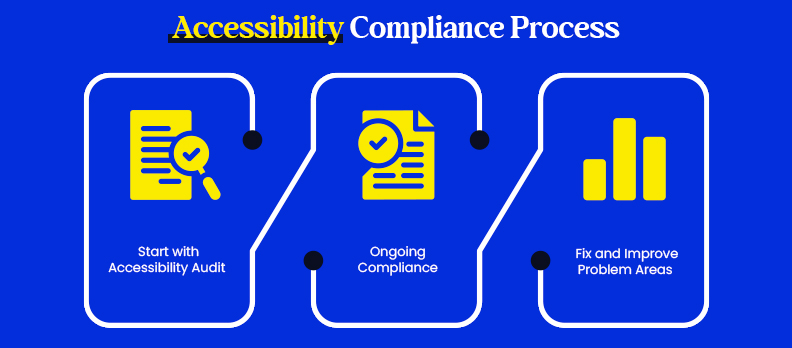
Accessibility compliance requires changing your digital life, addressing barriers, and retaining accessibility in your ongoing work.
1. Start with an Accessibility Audit
- Automated Testing: Tools like Access Audit help teams quickly surface high-risk issues and prioritize what needs attention first.
- Manual Testing: Checks visual layout, navigation, keyboard access and content structure.
- Accessible User Testing: Real users test screen readers, magnifiers, or keyboard-only navigation, to discover practical barriers.
When deeper expertise is needed, Access Services support teams with structured audits, expert reviews, and clear remediation guidance that turns findings into actionable fixes.
2. Fix and Improve Problem Areas
- New design: Enhance contrast, spacing, and clarity on interactive elements.
- Code fixes: Use semantic HTML, correct ARIA roles, and maintain full keyboard support.
- Content Improvements: New alt text, clear headings, information links, captions and transcripts.
Accessibility widgets like Access Widget can also help users customize their viewing experience while underlying fixes are being implemented.
3. Ongoing Compliance
- Team Training: Educate teams on accessibility.
- Regular checks: Check for accessibility with the access monitor when a new release or a major content update goes into effect.
- Accessible Workflows: Incorporate accessibility checks into design, development and publishing processes.
Tools such as Access Accy support ongoing monitoring and help teams maintain accessible content over time without disrupting everyday workflows.
Conclusion
Accessibility standards may differ between regions, but they are universal and converge to the same goal. Though each law has its own rules and enforcement levels, most do refer to WCAG as the guideline.
Access for businesses is not a question of avoiding legal risk. This is a way to reach a wider audience, increase the user experience and build trust over time.
In keeping everyone in compliance, auditing your digital products, providing barriers, and maintaining accessible workflows, you will remain compliant and create a more inclusive experience for everyone.
FAQs
Different regions create their own laws to meet their legal systems, industries, and policy goals. But, most of them remain relying on WCAG, and it has a common technical framework for digital access, as it is universally used to deliver digital accessibility.
Most regions and industries expect WCAG 2.1 AA as the minimum standard. There are some government agencies that may require higher levels of content or service standards.
No. Many laws also cover mobile apps, software, electronic documents, hardware, kiosks, online services, and digital devices.
Ideally, audits are needed:
- Because of major changes, many design elements needed to be changed.
- Before the new features are launched, it is necessary to test them first.
- Inactive compliance at least once or twice a year.
The following should be done in conjunction with WCAG and align with most global laws, but must include regional requirements like ADA, EAA, AODA and others in the plan to ensure complete compliance.